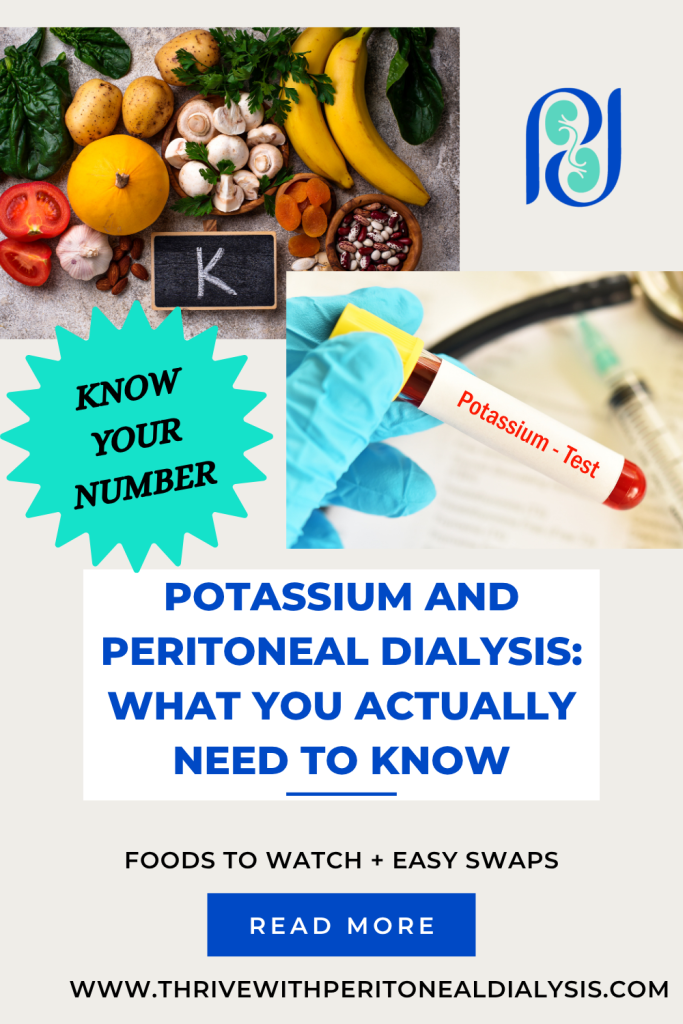
Potassium might be the most misunderstood part of a renal diet. Patients often hear “watch your potassium” without ever getting a clear explanation of why — which turns eating into a guessing game instead of something manageable.
Here’s the straightforward version.
Potassium helps regulate your heartbeat and muscle function — but when your kidneys aren’t filtering normally, potassium can build up in your blood faster than your body can clear it. Too much can lead to dangerous heart rhythm changes. The good news: peritoneal dialysis actually removes potassium more gradually and continuously than hemodialysis, which is why many PD patients have more flexibility with potassium than they expect — but “more flexibility” doesn’t mean “no attention needed.”
It’s not just what you eat — it’s also:
This is why potassium on peritoneal dialysis targets are genuinely individual. Your care team sets your specific range based on your labs, not a one-size-fits-all list.
High-potassium foods to be mindful of:
For some vegetables (like potatoes), peeling, cutting into small pieces, and soaking in water before cooking can reduce potassium content. Ask your renal dietitian if this applies to your specific situation — it’s not necessary for every food.
Potassium and peritoneal dialysis management isn’t about eliminating entire food groups out of fear — it’s about knowing your personal target, understanding what influences it, and making informed swaps rather than guessing. If you haven’t reviewed your specific potassium range with a renal dietitian, that conversation is worth having — labs, not internet lists, should guide your actual numbers.
This post is meant to build understanding, not replace your care team’s specific guidance. Always confirm your individual potassium targets with your nephrologist or renal dietitian.
Eating well is one part of feeling good on PD – comfort during your actual exchanges is another. If tape irritation or nighttime tubing kinks are still part of your routine, the PD Essentials Bundle pairs the PD Flow Belt™ and Kink Free PD™ together, so you can take care of the daily details that make dialysis feel a little more manageable, one less thing at a time.