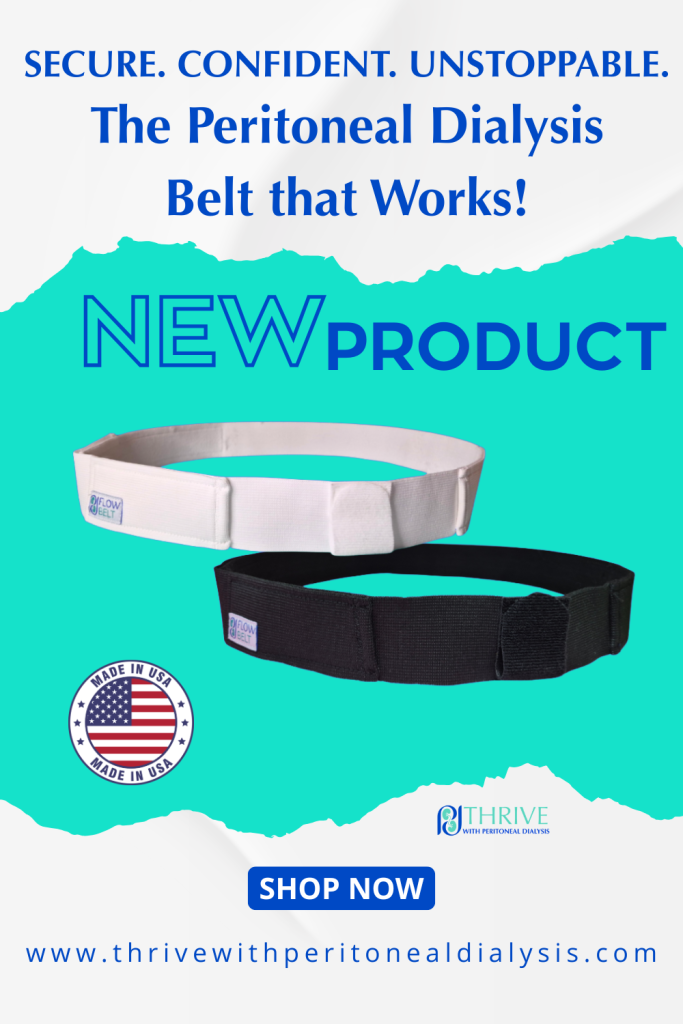
Here’s a fun fact nobody tells you before you start designing medical accessories: most of them are designed by people who have never actually worn the thing they’re designing. We didn’t want to be that.
When we set out to build a peritoneal dialysis belt, we didn’t start in a lab or a boardroom. We started by asking actual patients and caregivers one simple question: what’s driving you crazy about your current setup? Turns out, quite a lot.
If you’re on PD, some of this might sound painfully familiar:
We heard some version of this from patient after patient, and a pattern emerged fast: existing solutions were treating comfort like an afterthought, not a requirement. Considering people wear this thing 24/7 – when comfort should matter most – that felt backwards.
We went back to the drawing board and found better materials, better construction, and a design that actually makes sense for real life on PD.
None of this was theoretical. Every change traces back to something a real patient told us, in their own words, about their own actual night.
It’s easy to treat a peritoneal dialysis belt as “just an accessory.” But if you’re on PD, your equipment isn’t separate from your quality of life – it is your quality of life, especially overnight. A belt that fights you all day and night doesn’t just cost you comfort, it can cost you sleep, and sleep is not exactly a nutrient you can afford to skip when your body’s already working overtime.
We didn’t set out to reinvent the wheel. We set out to fix the specific, annoying comfort and 2 AM problems that patients were actually living with – because “just get used to it” was never good enough for us, and it shouldn’t have to be good enough for you either.
If tape rash, tubing kinks, bulky belts, or restless nights sound familiar, we built something specifically for you. Pair the PD Flow Belt™ with Kink Free PD™ in our PD Essentials Bundle for full day-to-night support – designed by listening to patients first, not guessing on their behalf.
[Shop the PD Essentials Bundle →]
Every product decision at Thrive with Peritoneal Dialysis starts with patient feedback. If you have thoughts on what’s working (or not) for you, we’d genuinely love to hear it.