If you’ve recently started PD, one of the first questions that comes up is:
“What can I actually eat on peritoneal dialysis?”
And let’s be honest – it can feel a little overwhelming at first.
But person to person?
It doesn’t have to be complicated.
When you eat on peritoneal dialysis, your nutrition becomes part of how you feel every single day.
The good news?
You actually have more flexibility on PD than other forms of dialysis.
But there are a few things that matter more now:
It’s not about being perfect – it’s about being aware.
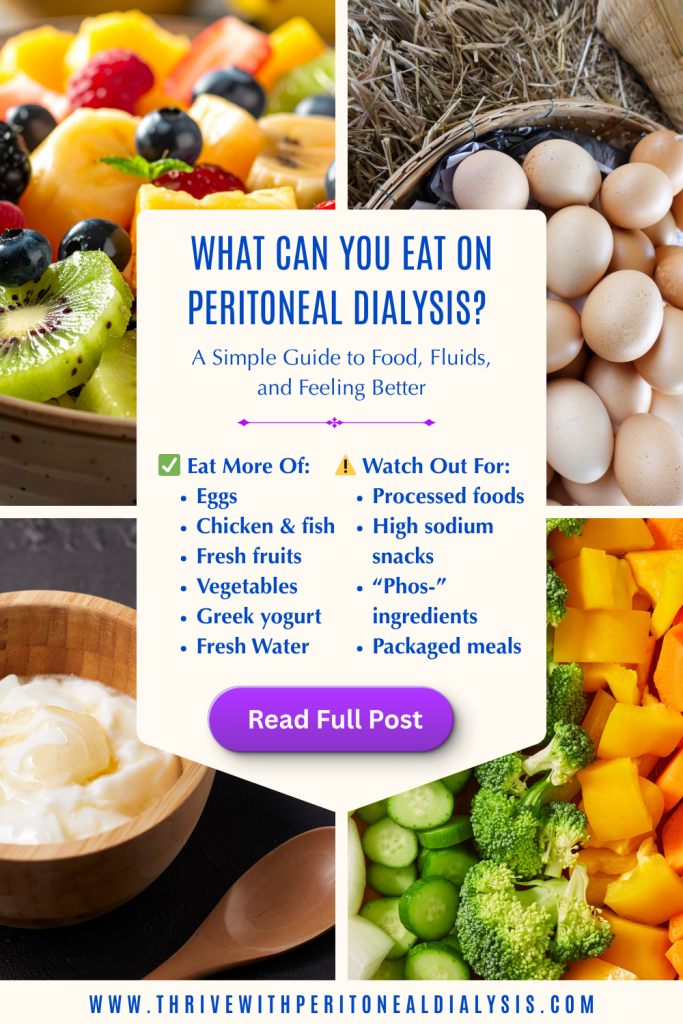
On PD, your body loses protein during treatment.
So instead of avoiding it…
—> you actually need to lean into it.
Think:
More protein = more energy, better recovery, and feeling stronger overall.
Phosphorus, potassium, and sodium all play a role in how your body functions – when they’re out of balance, you’ll feel it. On PD, your kidneys aren’t doing this work the same way anymore – so these levels depend a lot more on what you eat and how your body responds.
Phosphorus can build up in your body and affect your bones and heart over time. Potassium helps control your muscles and heartbeat, but too much or too little can cause real issues. And sodium? That’s the one that can sneak up on you fast – impacting swelling, fluid retention, and blood pressure.
The tricky part?
They hide in a lot of processed and packaged foods.
That’s where a new habit comes in…
If you haven’t adopted the habit to read labels yet –
—> this is your moment!
And honestly? It’s a good thing.
When you start paying attention to ingredients, you naturally begin choosing higher-quality foods.
Like Lucy says:
“Reading labels is now just a part of my regular routine, and I actually enjoy it. We’ve all gotten healthier for it.”
Look for:
It’s not restriction – it’s awareness.
Fluid intake on PD is different for everyone.
Some people can drink more than they expected…
others need to be more mindful.
Pay attention to:
Your care team will adjust your fluid intake as your body changes, so the amount you need may not stay the same. Listen to their guidance, drink what they recommend, and let them know what you’re noticing – your body is always giving you clues.
It’s not a perfect diet.
It’s:
And yes… still enjoying your food.
Feeling good starts with how you eat on peritoneal dialysis.
Feeling secure starts with how your setup supports you.
When your nutrition is working with your body – and your setup is working with you – you’ll notice a real difference.
The PD Essentials Bundle was designed for exactly that:
Because when your days and nights both feel better…
everything starts to change.