
Most people don’t realize they have chronic kidney disease until it’s already progressed.
Not because they weren’t paying attention –
but because the early signs are easy to miss.
They don’t feel dramatic.
They don’t scream “something is wrong.”
They show up quietly.
And often, they get brushed off as stress, aging, or just being tired.
If you’ve been feeling “off” lately and can’t quite explain why, this might help connect some dots.
Chronic kidney disease happens when your kidneys slowly lose their ability to filter waste and excess fluid from your blood.
It doesn’t happen overnight.
It’s a gradual process – often developing over months or years.
And in the early stages, your body does a pretty good job compensating.
Which is why symptoms can be subtle.
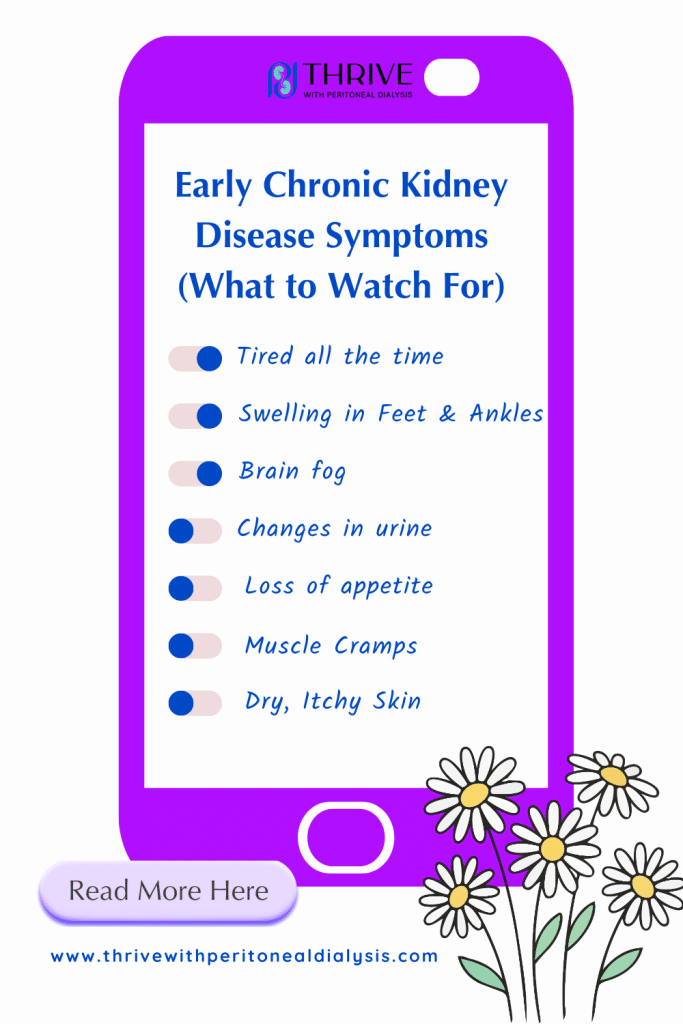
Here are some of the most common signs people experience early on:
None of these on their own automatically mean kidney disease.
But when a few start showing up together?
That’s when it’s worth paying attention.
Here’s the tricky part:
Most of these symptoms can be explained away.
You might think:
And life moves on.
But chronic kidney disease doesn’t usually get better on its own.
It progresses: Slowly. Quietly.
Until it becomes something you can’t ignore.
If you’re noticing a pattern – not just a one-off bad day – it’s worth checking in with your doctor.
Simple blood and urine tests can give you a clear picture of how your kidneys are functioning.
Early detection doesn’t mean something is wrong beyond repair.
It means:
👉 You have time
👉 You have options
👉 You can take control early
If chronic kidney disease advances, your care team may start talking about treatment options.
For many people, that includes dialysis.
And while that conversation can feel overwhelming, it’s not the end of your independence or your life as you know it.
There are options – like peritoneal dialysis – that allow people to manage treatment at home and continue living fully.
But the goal is always the same:
👉 Catch it early when you can
👉 Manage it proactively
👉 Stay as far ahead of it as possible
If you’re in that space of wondering, questioning, or waiting for answers—
You’re not alone, a lot of people don’t realize what’s happening at first.
There’s no failure in that, just information you didn’t have yet.
Your body is usually trying to tell you something.
Sometimes it whispers – Sometimes it repeats itself.
The more you learn to recognize the signs, the more power you have to respond early.
If something here feels familiar, it might be time to check in with your doctor – early action can make a big difference.



Leave a Reply