
Get a clear, simple understanding of peritoneal dialysis — so you can feel more confident moving forward.
If you’ve recently been told you need dialysis, it’s normal to feel overwhelmed. You don’t have to figure everything out today — this is a place to start, one step at a time.

Understand your dialysis choices in a clear, simple way - so you can feel more confident in the path ahead.

Learn the basics of early care to help you feel more comfortable, prepared, and supported from the start.

See how dialysis can fit into your daily life — so you can keep doing what matters most to you.
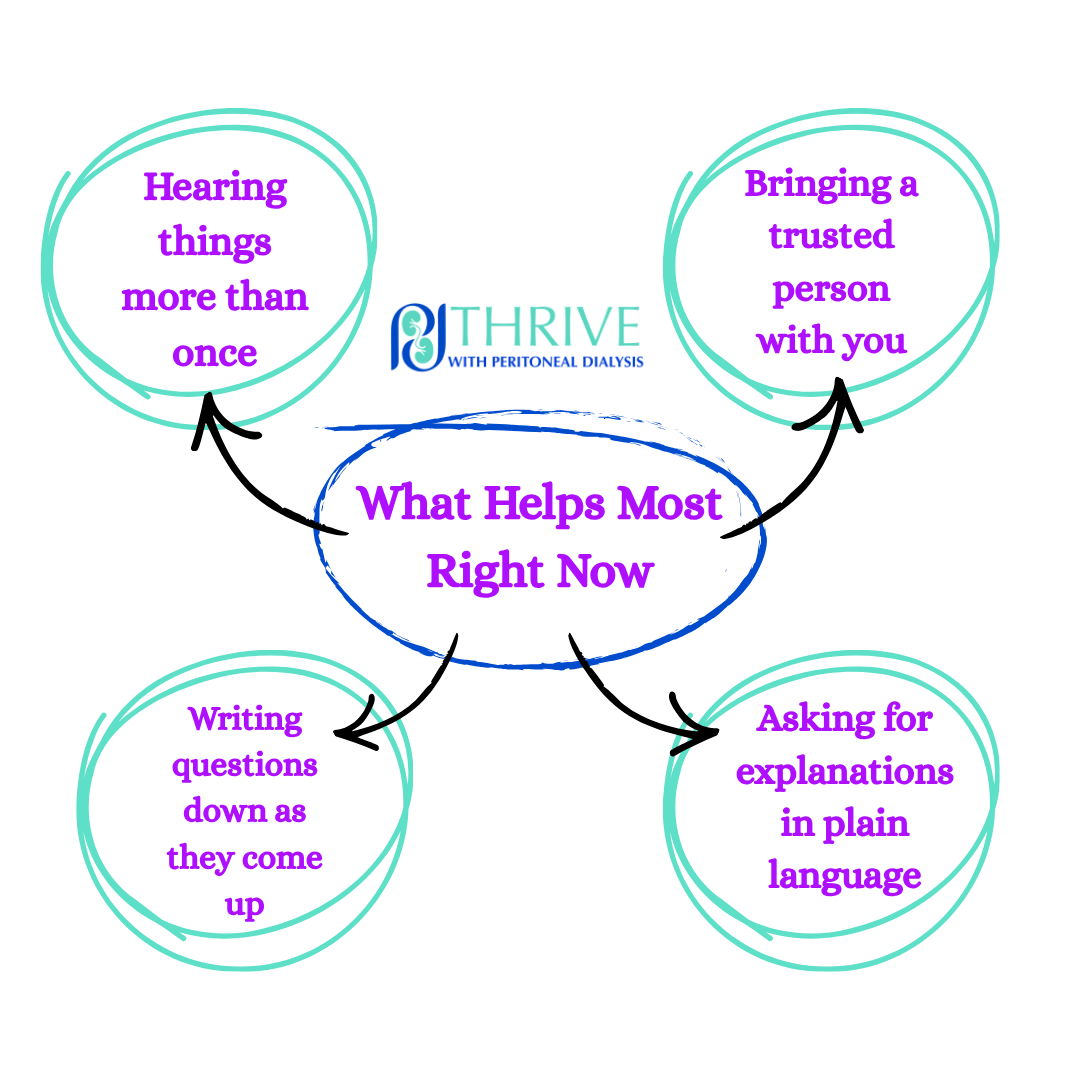
After diagnosis, most people move through an intense early phase. It’s not linear — and it’s not meant to be mastered all at once.
You’ll meet with your nephrologist and care team, learn about options, schedule catheter placement, and begin training. What makes this phase challenging isn’t difficulty — it’s the volume of information.
You’re allowed to slow the pace and come back to questions as your confidence grows.
Conversation
Meet with your nephrologist and care team
Preparation
Prepare for your time with PD, one step at a time
Choice
Learn about dialysis options that fit your life
Training
Get the resources needed to live an abundant life while on PD
A diagnosis changes the path – not the person walking it. People living with PD work, rest, travel, raise families, build routines, and find joy in everyday moments.
You don’t have to be brave today.
You just have to be here – and you already are.
Peritoneal Dialysis is a form of dialysis that works inside the body using your peritoneum (the lining of your abdomen) as a natural filter. A special fluid helps pull waste and extra water out — gently and steadily.

A catheter sits in your abdomen as your access point. Dialysis fluid flows in, your peritoneum filters waste and extra water into that fluid, then it drains out and gets replaced. This cycle repeats several times a day to keep your body in balance.
Peritoneal Dialysis is often chosen because it happens at home, on a schedule that fits your life. Many people find the steadier rhythm easier on their body and mind. You stay independent while having your care team close by. In many parts of the world, peritoneal dialysis is often the first option offered — helping people maintain more flexibility, independence, and quality of life as they adjust.
Let’s clear up a few common misconceptions — so you can move forward with more clarity and less pressure.
It gets easier as you go — with support, repetition, and real-life experience.
Most people hear about two main dialysis options: peritoneal dialysis (PD) and hemodialysis (hemo). Both are effective. Both are valid. Choosing one does not lock you in forever.
One isn’t better — they’re simply different ways of supporting your body.
Many people change modalities over time.
Your treatment can evolve as your life, health, and needs change.
This decision is about what fits right now.
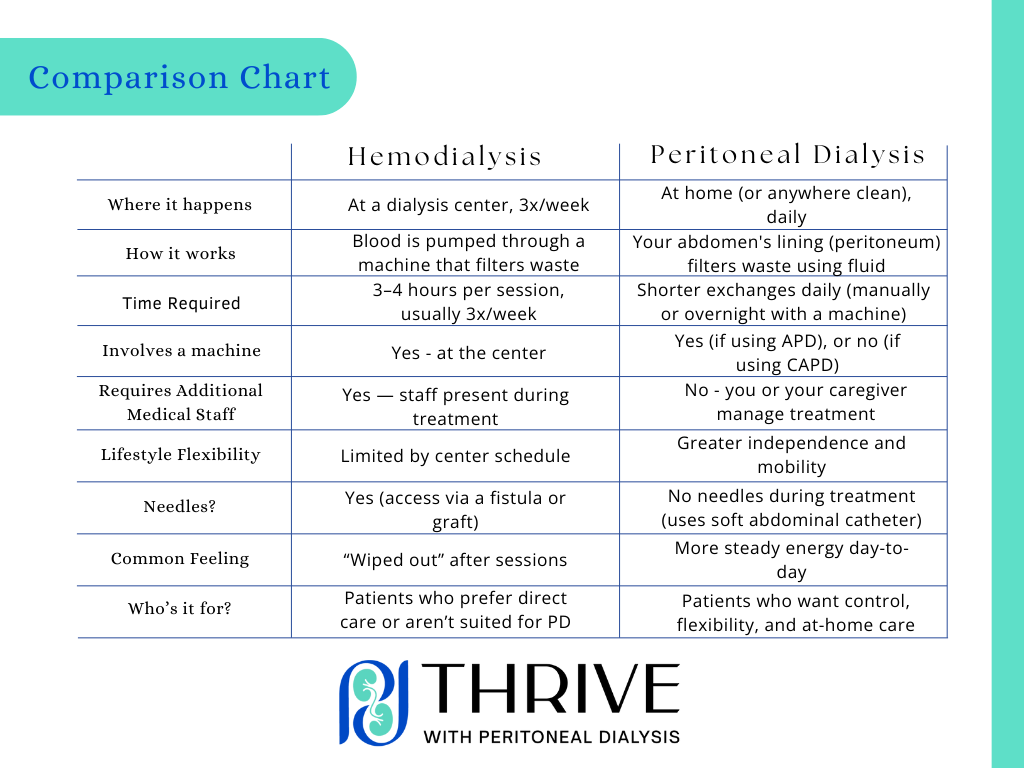
The right choice supports your health – and fits your life, your routine, and what matters most to you.

Your care team helps guide this part - so you can feel confident your treatment is supporting your body the way it needs to.

Treatment works best when it fits into your day — your schedule, your routines, and the life you want to keep living.

What feels overwhelming at first becomes more familiar — and with the right support, confidence grows step by step.
Your Home
Treatment happens in a space that feels familiar — where you can rest, move, and be yourself.
Routines That Work For You
Over time, you find a rhythm that fits your day - not something that takes it over.
You Keep Moving Forward
Life may shift, but it doesn’t stop. You keep doing what matters — just in a new way.
Support Is Always There
Your care team is there to guide you, answer questions, and support you as you learn and adjust.
PD doesn’t stop your life — it changes how it flows.
It means life finds a new normal — one that many people grow into, adapt around, and live fully within. You’re not starting over. You’re learning how to move forward.
A real-life guide to peritoneal dialysis
Practical clarity and real-life guidance — right when you need it most. Get our free guide to peritoneal dialysis — written for patients and caregivers navigating the early days, the hard moments, and everything that comes after.
Inside, you’ll find practical tips, real patient insight, and guidance shaped by lived experience — plus early access to thoughtfully designed solutions that make daily life with PD more manageable.
By signing up, you agree to our Terms of Service and Privacy Policy.
Real concerns deserve real answers. Your care team is here to help.
PD fluid does remove some protein, which is why your care team monitors this closely. They can adjust your treatment and diet to help maintain balance. Ask your nephrologist what your protein levels look like and what you need to focus on.
Yes. You may need to plan around your exchange schedule or find positions that feel comfortable with your catheter. Many people find their intimacy returns once they adjust. Talk openly with your partner and your care team about what feels right.
Getting on the transplant list starts with a referral from your nephrologist to a transplant center for an evaluation. This process looks at your overall health, readiness for transplant, and any steps needed to move forward. Your care team can help guide you through the process and timing that’s right for you. For a clear overview of how transplant listing works, including evaluation steps and what to expect, visit the American Kidney Fund transplant resources.
Some people explore living donation as part of the transplant process. Becoming a donor is a personal decision that involves medical evaluation, education, and informed consent. Transplant centers provide donors with their own care teams to ensure safety, privacy, and support throughout the process. If you’d like to learn how living donation works and what donors can expect, the American Kidney Fund offers clear, donor-focused information.
Many people on PD continue to urinate, especially early on. This is actually helpful because it means your kidneys are still working. Over time, urine output may decrease. Your care team will monitor this and explain what's normal for you.
The exchanges themselves shouldn't hurt, though you may feel pressure or fullness in your abdomen. Some discomfort is normal at first as your body adjusts. If something feels sharp or wrong, tell your care team right away. Pain isn't something you have to accept.
Yes. Many people travel locally and internationally on PD. You'll need to plan ahead, arrange supplies, and coordinate with your care team. It takes preparation, but it's absolutely possible. Ask your team about travel resources and what you need to arrange.
Trust your instincts. If something feels off—pain, fever, cloudy fluid, or just a gut feeling—contact your care team. They'd rather hear from you than have you wait and worry. Your body knows things. Listen to it.
No. You need a clean, dry space for exchanges, but it doesn't have to be a dedicated room. A corner of your bedroom, bathroom, or kitchen works fine. Many people set up a small station with their supplies. Your space is yours to arrange.